All Articles
9 April 2026

Softer-Season Mallorca: Beyond The Beaches

Experiences
Hotels
Travel
Experiences
Hotels
Travel

By Anna Hart | It might be the island’s coastline that makes it magnetic to summertime travellers, but Mallorca is a multifaceted paradise. Venture beyond the beaches, and travel in slower-season, to discover medieval market towns brimming with antiques, to cosy up with a hot chocolate in picturesque mountain villages, and to discover the off-season magic of Palma, the culinary and creative capital of the Balearic Islands.

Share
FBXLinkedIn

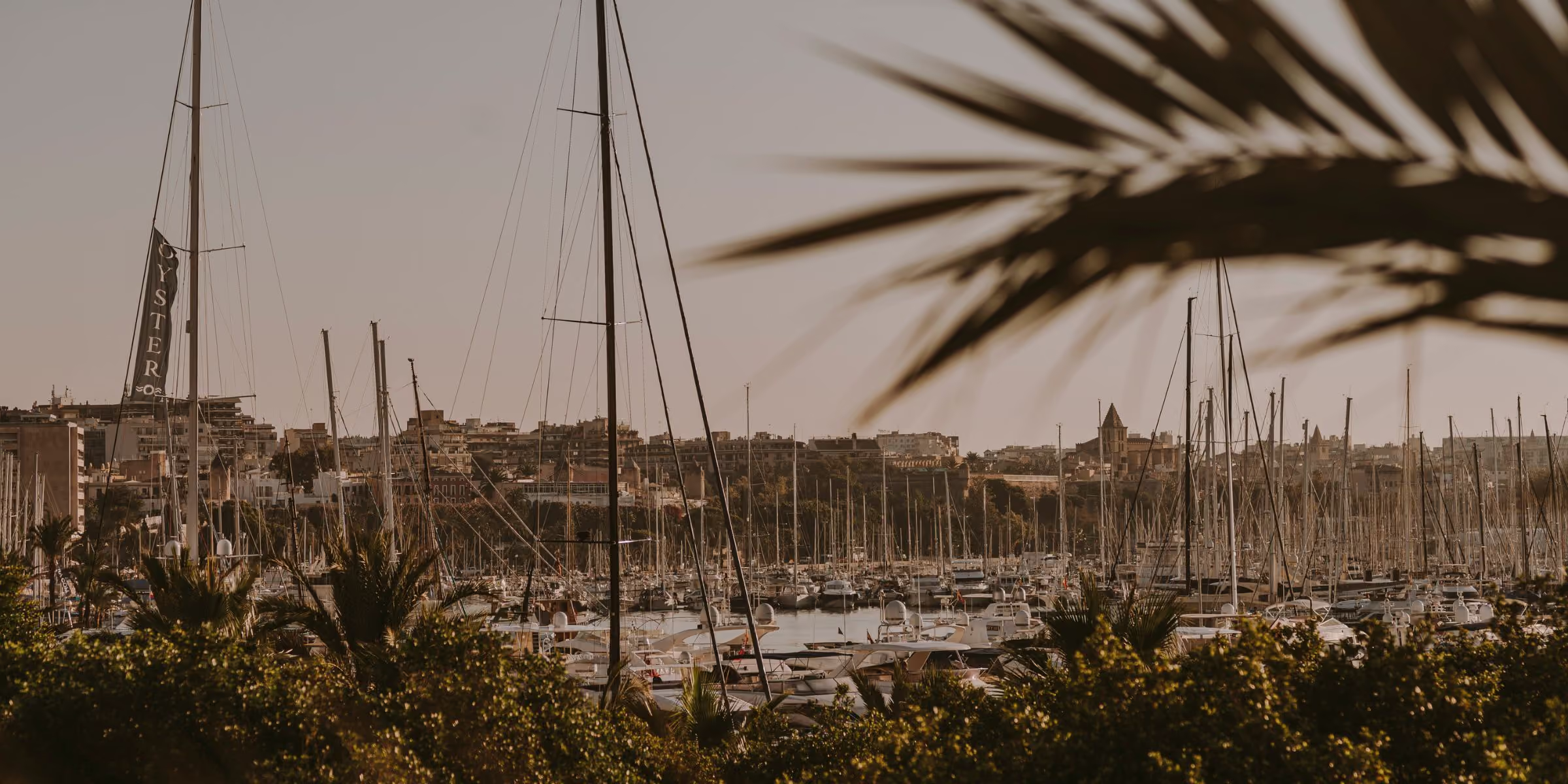
A historic port city rather than a beach destination, Palma might have the Mediterranean at her feet, but her life-loving soul is found in the labyrinth of cobblestoned lanes of both the Old Town and neighbouring Santa Catalina. Separated by the Torrent de la Riera, these two barrios are where you’ll find grand mansion houses and old fishermen’s cottages converted into international restaurants, interior design stores, independent galleries and dimly-lit cocktail bars.

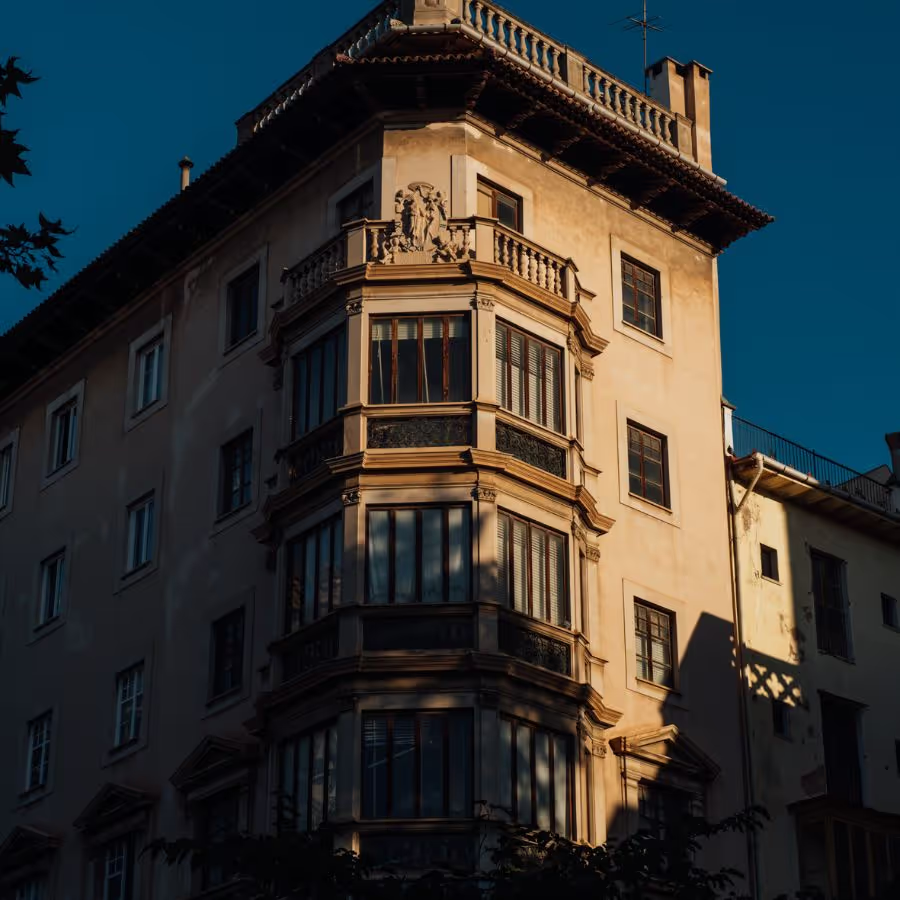
This season, Aethos Club Palma opens its doors in Santa Eulalia, in a stunningly-renovated four-storey townhouse in one of the most magnificent plazas in the Old Town. Designed by London-based design studio Tatjana von Stein, the new interiors of Aethos Club Palma showcase the best of Mallorca-based creative talent, from the bespoke textiles and ceramics to the carved crystalline Binissalem marble sinks. And with Aethos Club Palma as your base, you’ll absorb Palma’s grand artistic and cultural pedigree almost by osmosis. The property sits just a few twisty alleyways away from Palma’s magnificent pink-hued 13th century cathedral, known as La Seu, with a magical nave reimagined by the cherished Catalan Modernism architect Antoni Gaudí. Wander west west along the marina promenade to Es Baluard, a contemporary art museum, housed in a revamped 16th-century structure that formed part of the town walls, and now exhibits artworks by Picasso and Miró. Get your culinary bearings at boisterous Mercat de l’Olivar, before sweetening things up with the delectable pastries at century-old Forn del Santo Cristo, most celebrated for their flaky ensaïmades filled with sweet pumpkin paste. Make your way to Santa Catalina, where an innovative blend of British and Mallorcan cuisine showcasing market produce is served at Market Kitchen Palma - alternatively, head straight to the counters of tapas bars inside neighbouring Mercat de Santa Catalina. As you eat your way around the city, make time to marvel at Baroque facades illuminated by the gentle winter sunlight, sip vermouth in the cosy courtyards of grand medieval mansions, and linger in the vintage stores of Santa Catalina.

Whether you’re travelling car-free or not, Mallorca’s best-kept secret is how easy it is to explore the rest of the island from Palma. To the southeast, the medieval town of Santanyí is home to one of the island’s most charming plant-forward eateries, Grá. An Irish plant-based gastropub might sound surreal, but it all makes perfect sense the moment you step into this delightful old pub, complete with a cosy courtyard, regular Irish trad music sessions, and the best vegan Sunday roast you’ll ever taste, made with local produce selected from Santanyí’s weekly market. The vegan (crafted with coconut cream) Irish coffees are a highlight, and you can imbibe knowing there’s a regular bus from Santanyí to Palma, changing in the medieval golden-stoned town of Campos, which ideally you’d time with the colourful Thursday and Saturday street markets. Speaking of markets, if you firmly believe that the cooler months are best spent sifting through antiques and artwork at flea markets, hunting for woven textiles, vintage faux fur coats and art nouveau prints, hop on the Sunday morning train from Palma to Consell, home to the island’s largest antique market.

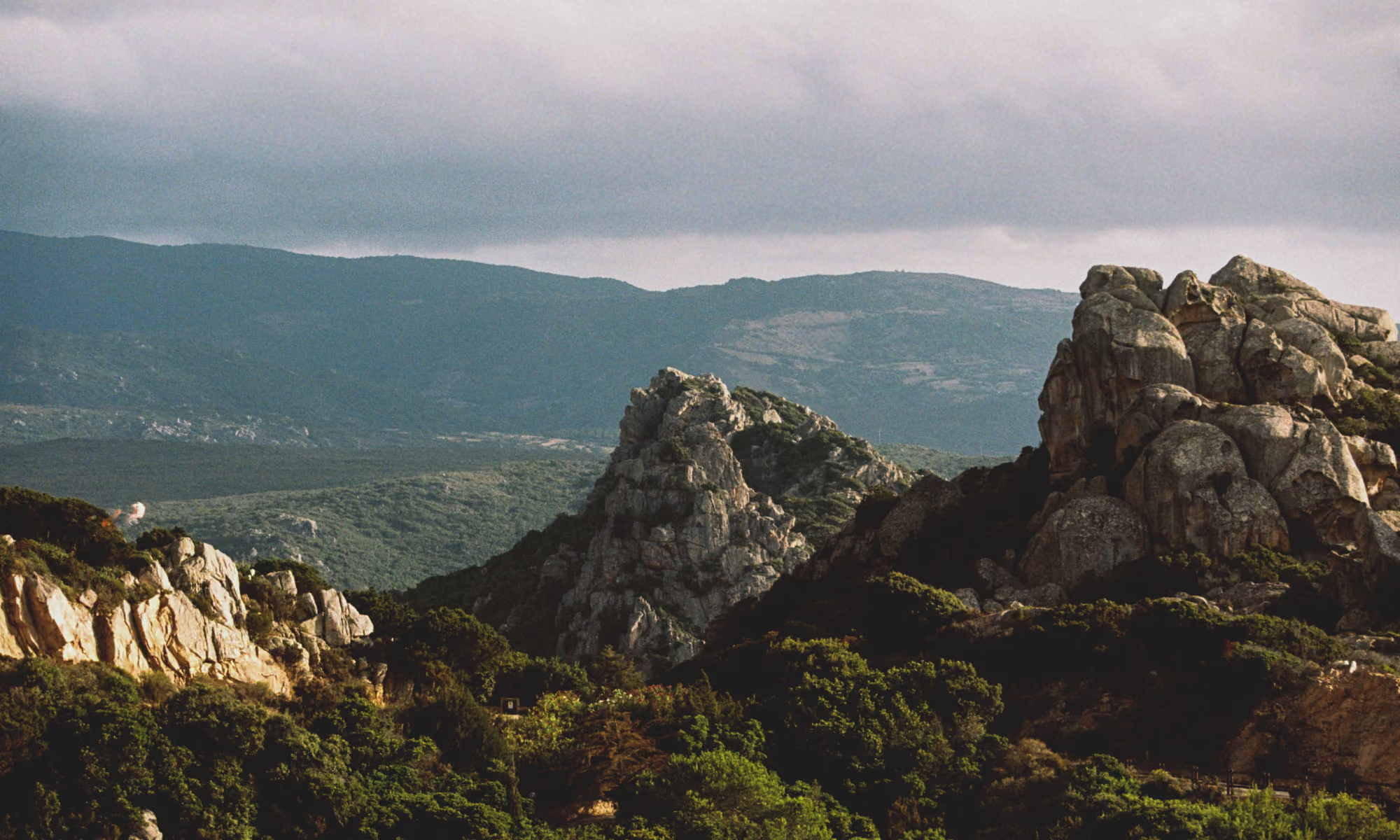
Mallorca’s northwest, meanwhile, is dominated by the ravishing Serra de Tramuntana, ripe with clifftop trails and mountain towns that become more magical outside the busy summer months. Take the enchanting vintage wooden train, dating back to 1912, that links Palma with the ochre-hued old town of Sóller, one hour away. Sóller sits three kilometres inland from the summertime resort Port de Sóller, but the mansions of citrus merchants in Sóller, and the Sala Picasso and Salo Miró at the train station, will keep art and architecture lovers firmly inland. Sala Picasso contains some 50 ceramics crafted by Picasso from 1948 to 1971, while Sala Miró displays prints from this famed Catalan master, whose maternal grandmother was from Sóller. Restless wanderers, meanwhile, should roam the coastal pathways from Sóller to the famed arty (and increasingly celebrity-populated) Deià. A shorter walk from Sóller (under 40 minutes) brings you to the quaint and quiet villages of Biniaraix and Fornalutx, two of the most picturesque spots in the Serra de Tramuntana. But in winter, perhaps the most atmospheric town in the Tramuntana mountains is Valldemossa, with a museum dedicated to Frédéric Chopin and George Sand, who spent time in the village, and historic cafes battling over selling the best hot chocolate on the island; our favourites are Sa Foganya and Ca'n Molinas, where thick Catalan-style hot chocolate is paired with fluffy coca de patata cream pastries.

Arriving on an island always feels like an event, a physically and emotionally detached space where people do things a little bit differently. Mallorca is magical at any moment of the year, but softer-season is the best time to discover this serene island paradise.

We use cookies to provide visitors with the best possible experience on our website. These include analytics, functionality, and targeting cookies. For more information, please see our cookie policy.